Walking Through History: A Hiker's Guide to the Lycians
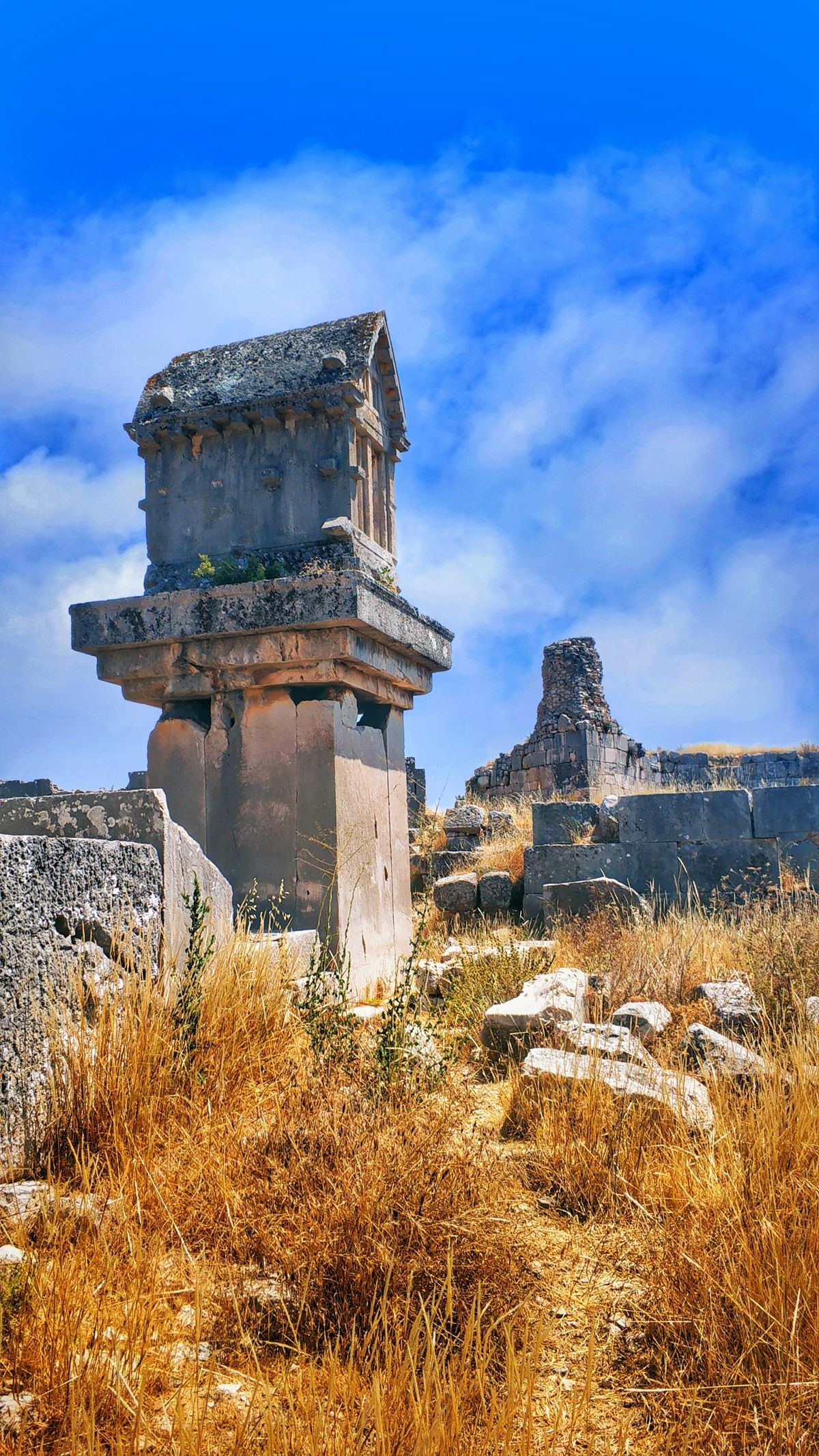
The Lycian Way is not just a trail through beautiful landscape. It is a walk through one of the ancient world's most distinctive civilisations - one that thrived here for over a thousand years and left behind ruins so well-preserved that you will stumble across them without warning, with no fence or ticket office in sight.
Who Were the Lycians?
Lycia was a region of ancient Anatolia - roughly the southwest coast of modern Turkey - that developed its own distinctive culture, language, and political system. The Lycians were not Greek or Persian, though they interacted with both. They were something entirely their own.
At their peak, they formed the Lycian League - one of the world's earliest democratic federations, where cities sent representatives to a central council and voted on shared decisions. The American founders knew about the Lycian League; it influenced their thinking about federal government.
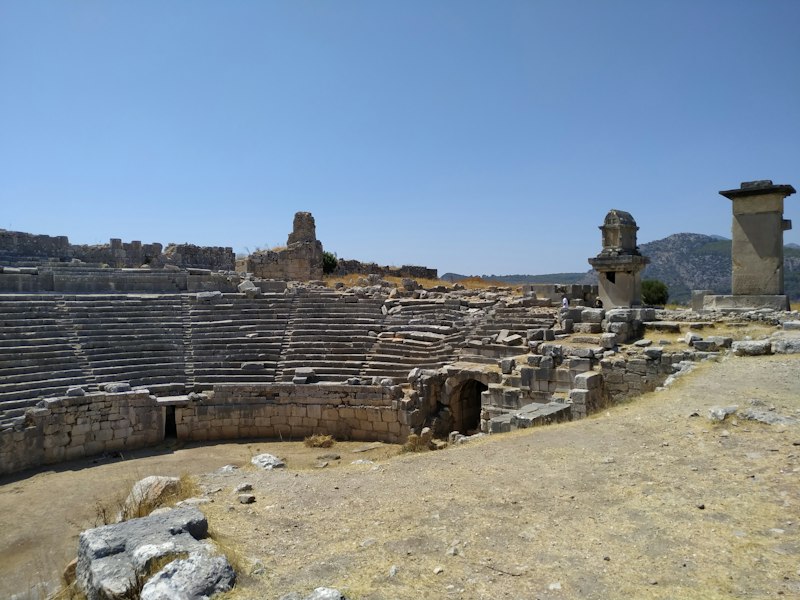
When the Persian king Harpagus swept into Lycia around 540 BC, the Lycians of Xanthos - faced with conquest - burned their own city rather than surrender. The ruins of Xanthos still stand on the trail today.
The Rock Tombs
The most visible sign of Lycian civilisation is their tombs. The Lycians believed the dead should be elevated, closer to the gods, closer to the eagles that would carry their souls away. So they carved their tombs directly into cliff faces.
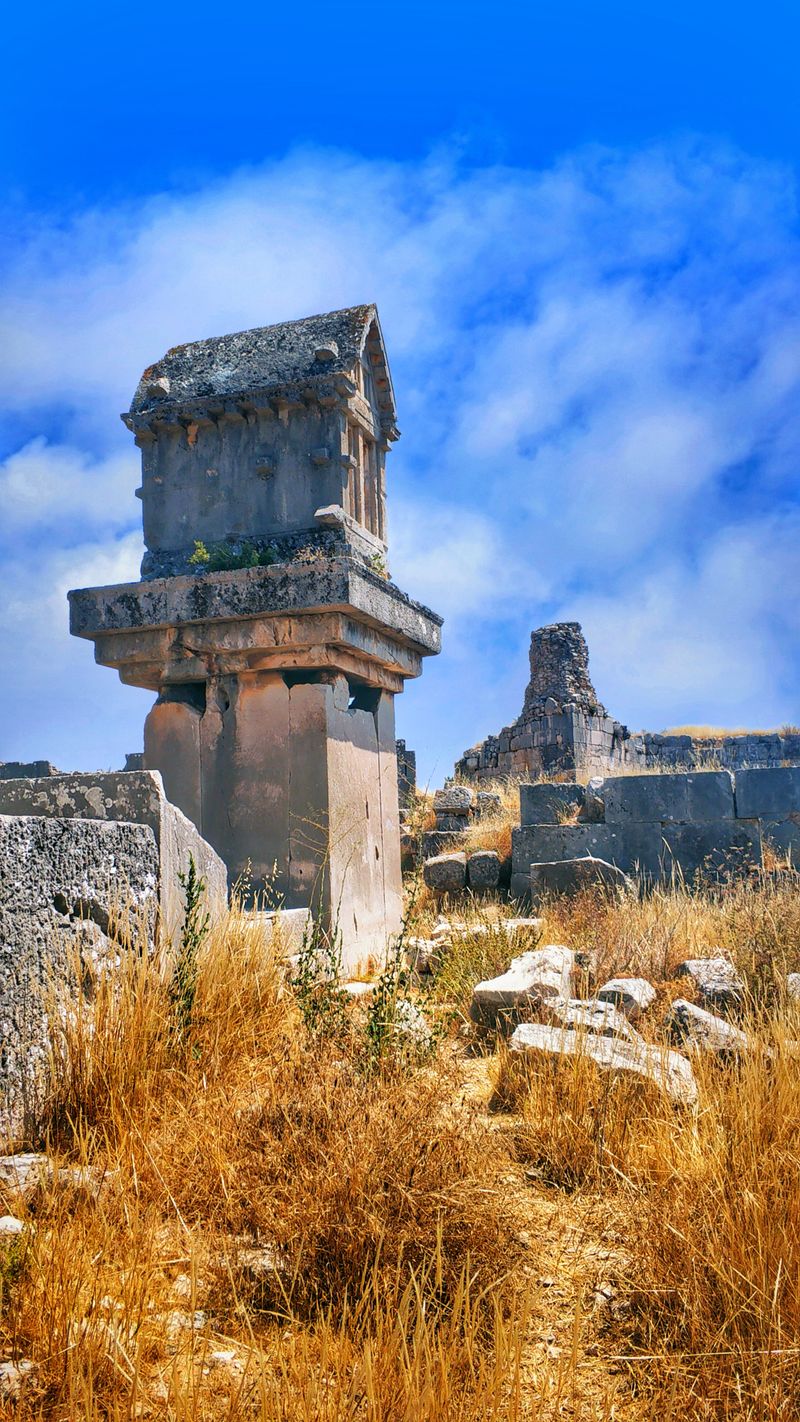
Walking through Kas, you will see tombs cut into the rock above the town. At Myra (ancient Demre), entire cliff faces are honeycombed with carved chambers. At Kalekoy, a sarcophagus sits half-submerged in the lagoon.
These are not reconstructions. They are original, 2,000-year-old structures, and you can walk right past them.
The Cities You Will Pass
Xanthos - The ancient capital of Lycia. UNESCO World Heritage Site. The Harpy Tomb here is one of the most famous Lycian monuments. Stage 7.
Letoon - The sacred sanctuary of the Lycian League, dedicated to the goddess Leto. Also UNESCO listed. Three temples still largely intact. Stage 7.
Myra - The city of rock tombs and home of St Nicholas - the real historical figure behind Santa Claus - who served as bishop here in the 4th century AD. Stage 18-19.
Olympos - Ancient city ruins that emerge directly from riverbank vegetation, coexisting with the beach in an almost surreal way. Stage 22.
Phellos - A lesser-known but atmospheric Lycian city high on a plateau above Kas. Walk through it on Stage 11 with no other visitors and tombs scattered among the scrub.
Phaselis - Built around three natural harbours. Alexander the Great wintered here. Stage 24.
What to Look For
Beyond the famous sites, keep your eyes open as you walk. Rock-cut tombs appear on cliff faces throughout the route. Ancient cisterns carved to collect rainwater are still visible near paths. Sections of the original Lycian road network survive - the same stones walked by merchants and soldiers two millennia ago.
The Lycian Way follows ancient routes deliberately. Much of what you are walking on has been walked for thousands of years. That is worth a moment of thought, somewhere out there between the ruins and the sea.
Enjoyed this guide?
Follow @walk.lycianway on Instagram for more trail tips, route flyovers and hiker stories.
Follow on Instagram